What Is Cordura Fabric? Features, Types & Uses
What is Cordura® fabric, what makes it so durable, and why is it widely used in military and outdoor equipment? In this comprehensive guide, we explore Cordura fabric types, denier ratings, key advantages, applications, and what to consider when choosing Cordura products.
Cordura® fabric has become a benchmark for durability and reliability in the outdoor and tactical equipment industry. But what exactly is Cordura, why is it so widely used, and which products benefit most from it? In this guide, we take a closer look at the characteristics, types, applications, and advantages of Cordura fabric.
What Is Cordura® Fabric?
Cordura is the name of a family of high-performance fabrics developed for demanding applications. Originally developed by DuPont in 1929, Cordura has become particularly well known for its exceptional resistance to abrasion, tearing, and punctures.
Cordura fabrics are produced using specialized weaving technologies, with yarn thickness measured according to a denier rating. This allows manufacturers to achieve an effective balance between weight, flexibility, and durability depending on the intended application.
Key Features of Cordura Fabric
1. Superior Abrasion Resistance
One of the most important advantages of Cordura fabric is its excellent abrasion resistance. Compared with standard nylon fabrics, Cordura can provide significantly higher resistance to wear and friction.
This is particularly important in products such as backpacks, tactical bags, shoulder straps, knee and elbow areas, and other components that are exposed to continuous friction.
2. High Tear and Puncture Resistance
Cordura fabrics are designed to withstand demanding conditions. Their high tensile strength provides excellent resistance to tearing and puncturing, helping outdoor and tactical products maintain their structural integrity and extend their service life.
For equipment that is regularly exposed to rough surfaces, heavy loads, or harsh environments, choosing a durable fabric such as Cordura can make a significant difference.
3. Water Repellency and Weather Resistance
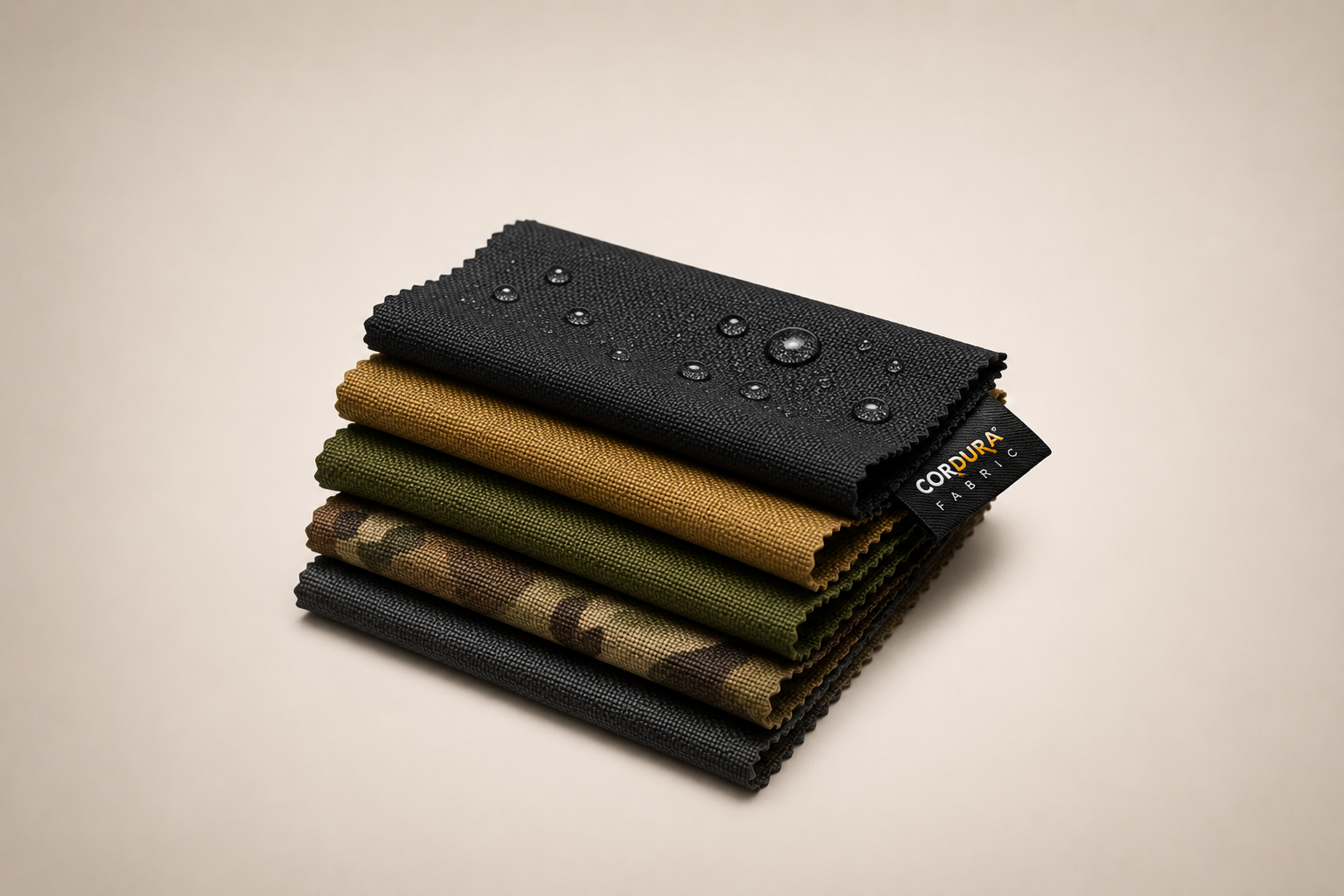
Many Cordura fabrics are treated with a DWR (Durable Water Repellent) finish. This treatment causes water droplets to bead on the surface instead of immediately penetrating the fabric.
Depending on the specific Cordura fabric and finish, additional resistance to UV exposure and environmental conditions can also help maintain long-term performance and appearance.
It is important to note that water repellency depends on the specific fabric construction and coating. Cordura should not automatically be considered completely waterproof.
4. Lightweight and Flexible Construction
Despite its high level of durability, Cordura can offer an excellent strength-to-weight ratio.
Modern Cordura fabric options, including lightweight constructions, are designed to provide a balance between reduced weight, flexibility, and long-term durability. This makes them suitable for both everyday products and professional outdoor equipment.
Cordura Fabric Types and Denier Ratings
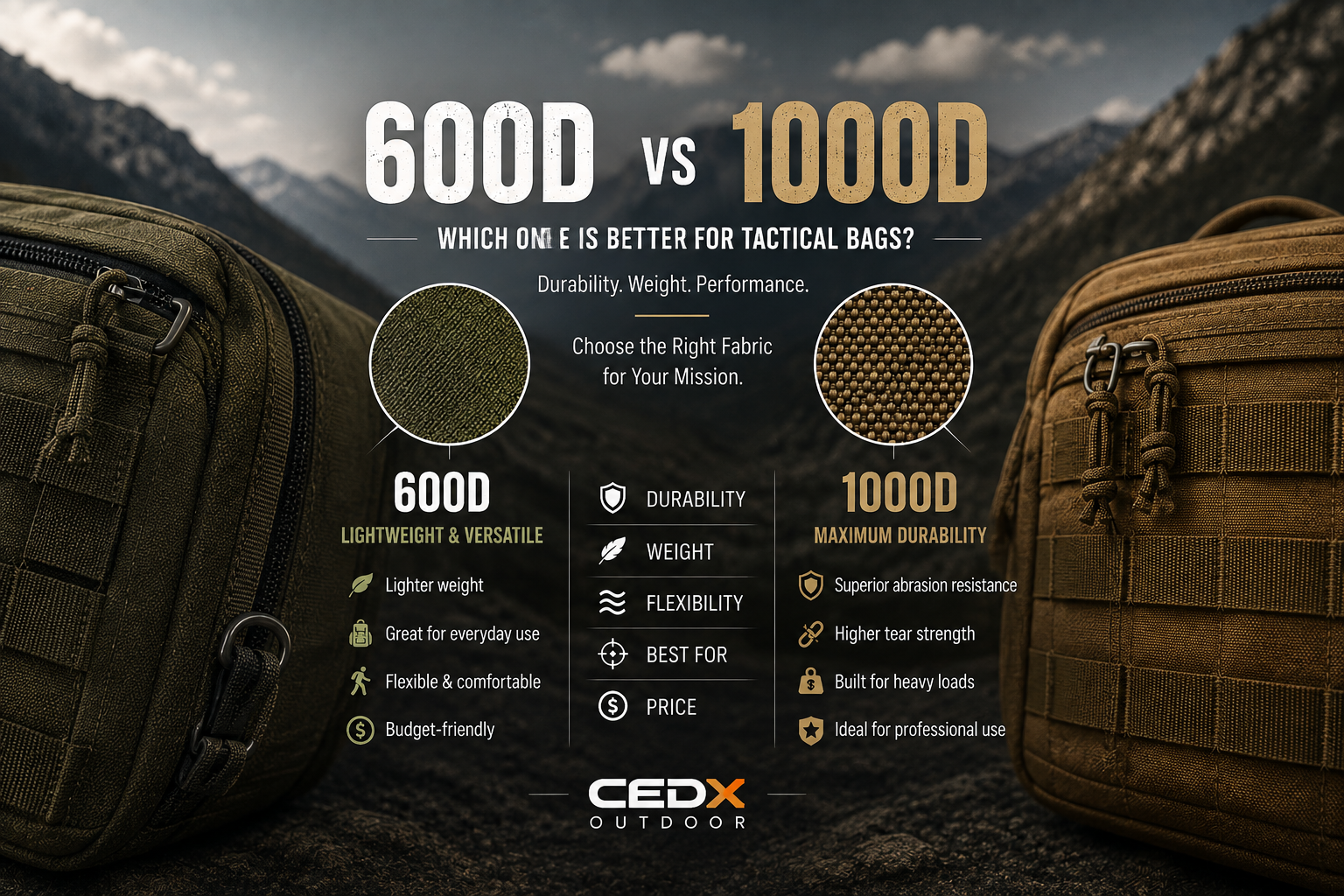
Denier (D) is a measurement commonly used to describe the thickness and weight of textile yarn. In general, a higher denier indicates a heavier and more robust fabric, although fabric construction, weave, coating, and yarn type also have a major impact on overall performance.
Common Cordura applications include:
160D–330D Cordura Lite: Lightweight applications, liners, and internal compartments
500D Cordura: General-purpose bags, backpacks, and everyday outdoor use
1000D Cordura: Tactical bags, military equipment, and demanding outdoor applications
1050D Ballistic Nylon: Heavy-duty applications where maximum abrasion resistance is required
For example, 500D Cordura may be an excellent choice for a lightweight trekking or everyday backpack, while 1000D Cordura can be more suitable for tactical backpacks and equipment designed for demanding environments.
However, denier alone does not determine fabric quality. Construction, yarn characteristics, coating, stitching, and overall product design should also be considered.
Where Is Cordura Fabric Used?
Outdoor and Tactical Bags
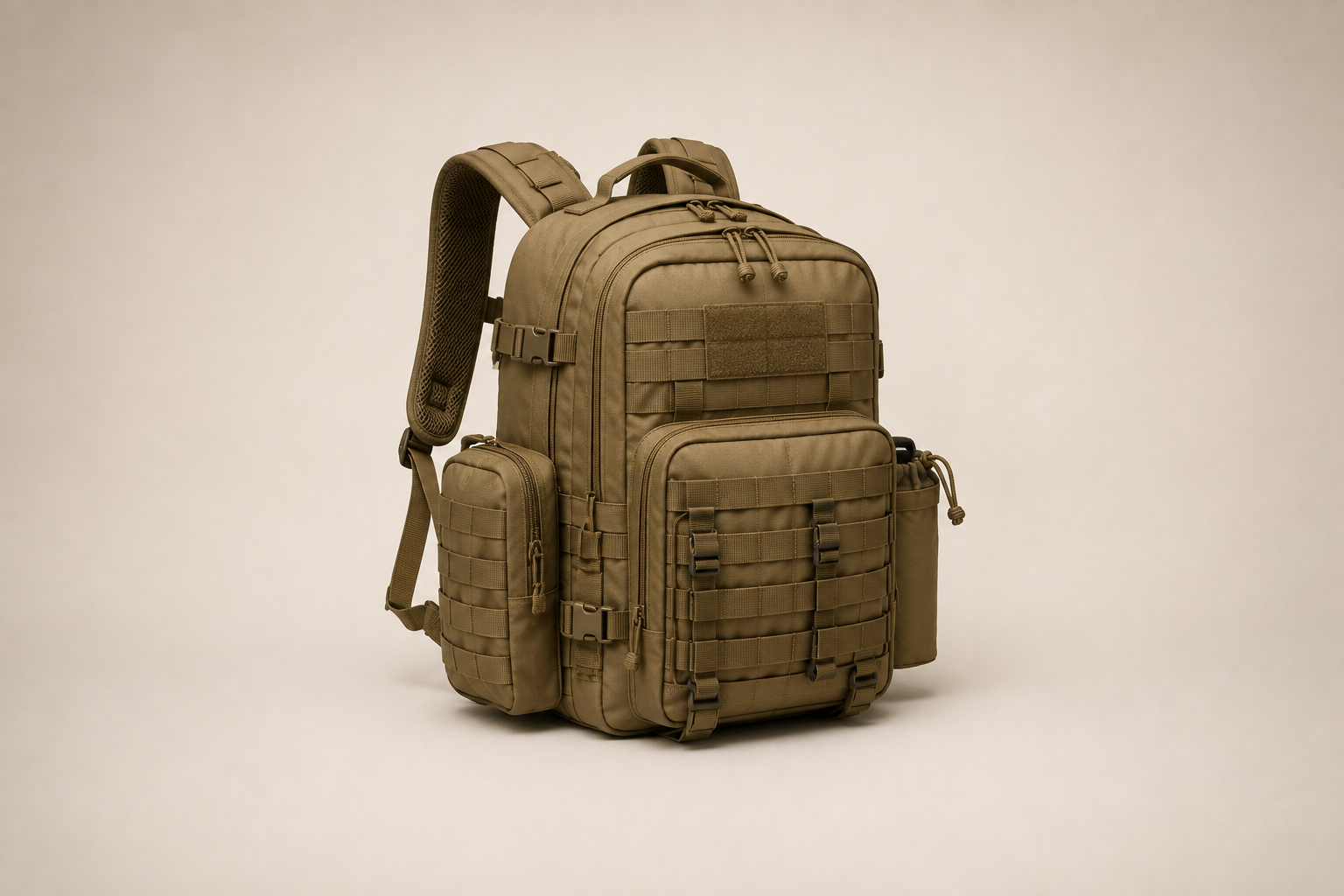
Backpacks, tactical bags, laptop bags, MOLLE-compatible equipment, and other technical carrying solutions are among the most common applications for Cordura fabric.
At CEDX Outdoor, we use original 1000D Cordura fabric in our tactical bag production to provide the durability required for demanding applications.
Camping and Outdoor Apparel
Cordura is also used as a reinforcement material in outdoor clothing. Areas such as knees, seat panels, elbows, and shoulders can be reinforced with highly abrasion-resistant fabric to improve durability in high-wear zones.
Military and Tactical Equipment
Cordura fabrics are widely used in tactical vests, MOLLE pouches, equipment bags, protective gear, and other products designed for demanding environments.
The appropriate fabric specification depends on the product design, intended use, required performance, and applicable standards.
Footwear and Boots
Cordura can also be found in the upper sections and reinforcement zones of hiking boots and outdoor footwear.
Its abrasion resistance helps protect areas such as the toe and heel from wear, contributing to the overall durability of the footwear.
What to Consider When Choosing Cordura Products
1. Match the Denier Rating to the Intended Use
The right denier depends on how the product will be used.
For everyday applications, 500D Cordura can provide an excellent balance between durability and weight. For professional outdoor, tactical, or heavy-duty applications, 1000D and higher-density fabrics may be more appropriate.
The key is not simply choosing the highest denier, but selecting the right fabric for the actual application.
2. Check the Water-Repellent Finish
If water resistance is important, check whether the fabric has a DWR or another suitable water-repellent treatment.
Keep in mind that water repellency can decrease over time due to abrasion, washing, and regular use. Proper maintenance can help preserve the performance of the finish.
3. Pay Attention to Stitching and Reinforcement
Even the most durable fabric cannot compensate for poor construction.
When choosing a Cordura backpack or tactical bag, pay attention to stitching quality, stress points, seams, and reinforcement areas. Double stitching and bar-tack reinforcement can significantly improve durability in high-load areas.
4. Look for Genuine Cordura Fabric
When genuine Cordura fabric is important to your application, check the product specifications and verify the fabric source.
At CEDX Outdoor, we use genuine Cordura fabric in our Cordura-based products, combined with professional construction and quality-control processes.
Cordura Fabric Care and Cleaning Tips
Proper care can help maintain the performance and appearance of Cordura fabric over time.
Wash at 30°C using a gentle cycle when permitted by the product's care label.
Avoid bleach and fabric softeners, as they may affect certain fabric finishes.
Air drying is generally recommended; if machine drying is permitted, use a low-temperature setting.
If water repellency decreases, an appropriate reproofing or impregnation spray can help restore the water-repellent finish.
Always follow the manufacturer's specific care instructions for the finished product.
CEDX Outdoor and Cordura Fabric
At CEDX Outdoor, we use original 1000D Cordura fabric in our tactical bags, backpacks, and tactical vest production.
Our manufacturing operations combine durable technical fabrics with carefully selected components and professional quality-control processes to meet the requirements of demanding outdoor and tactical applications.
In addition to Cordura fabric, we use components such as YKK zippers, UTX-Duraflex buckles, and reinforced bar-tack stitching to improve durability at critical stress points.
For brands looking for reliable tactical and outdoor equipment manufacturing, material selection is only one part of the process. Fabric construction, pattern design, stitching, reinforcement, hardware, and quality control all contribute to the final product.
Why Choose Cordura Fabric?
Cordura fabric is an excellent choice for applications where durability, abrasion resistance, long service life, and reliable performance are important.
It is particularly well suited to outdoor, trekking, camping, tactical, and professional equipment where products are expected to withstand demanding conditions.
Key advantages include:
✓ Longer product service life
✓ Excellent abrasion resistance
✓ High tear and puncture resistance
✓ Reliable performance in demanding environments
✓ A strong balance between durability and weight
✓ Reduced need for frequent repairs and replacement
The right Cordura fabric, however, should always be selected according to the product's intended use rather than simply choosing the highest denier available.
Related Keywords
Cordura fabric, what is Cordura, what is Cordura fabric, 1000D Cordura, Cordura fabric types, Cordura denier, Cordura vs nylon, durable fabric, tactical bag fabric, tactical backpack fabric, outdoor fabric, Cordura care, abrasion resistant fabric, military fabric
Related Articles
600D vs 1000D: Which Fabric Is More Durable? (2026 Comparison)
What Is a MOLLE Tactical Backpack?