How to Choose a Camping Backpack: The Complete 2026 Buying Guide
Choosing the right camping backpack is one of the most important decisions for any outdoor adventure. Whether you're planning a weekend camping trip, a multi-day hiking expedition, or a long-distance trek, your backpack will directly affect your comfort, mobility, and overall experience.
Many beginners choose a backpack based only on its appearance or storage capacity. However, factors such as carrying comfort, durability, material quality, organization, and proper fit are equally important.
This guide explains everything you need to know before buying a camping backpack, helping you choose the perfect model for your adventures.
Start by Understanding Your Adventure
Not every camping trip requires the same backpack.
The ideal backpack depends on where you're going, how long you'll stay outdoors, and how much equipment you'll carry.
Before purchasing, consider:
Trip duration
Weather conditions
Type of activity
Weight of your gear
Season
Personal comfort
Buying a backpack that's too large often encourages unnecessary packing, while a backpack that's too small can leave essential gear behind.
Choosing the right balance is always the best approach.
What Size Camping Backpack Do You Need?
Backpack capacity is measured in liters.
Here's a general guideline:
Adventure Type Recommended Capacity
Day hikes 20–30 L
Weekend camping 35–50 L
Multi-day trekking 50–65 L
Extended expeditions 65–80 L
These recommendations vary depending on your equipment.
Ultralight campers can often use smaller backpacks, while winter campers typically need additional space for insulated clothing and larger sleeping bags.
Summer vs. Winter Camping
The season plays a major role in backpack selection.
Summer Camping
You'll usually carry:
Lightweight clothing
Compact sleeping bag
Smaller cooking equipment
Less bulky gear
A 40L–50L camping backpack is often sufficient.
Winter Camping
Winter trips require additional equipment, including:
Insulated jackets
Thermal clothing
Larger sleeping bags
Extra food
Emergency gear
For these conditions, a 60L hiking backpack is generally a better choice.
Comfort Matters More Than Capacity
Many people focus entirely on backpack size.
Experienced hikers know that the carrying system is actually more important.
A quality backpack transfers most of the weight from your shoulders to your hips, reducing fatigue during long hikes.
Look for features such as:
Adjustable shoulder straps
Padded hip belt
Sternum strap
Breathable back panel
Compression straps
Load-lifter straps
A properly fitted backpack makes even heavy loads feel significantly lighter.
Choosing the Right Backpack Fit
A backpack should fit your body—not just your gear.
Before buying, check:
Torso length
Hip belt position
Shoulder strap adjustment
Back panel length
Most of the weight should rest on your hips rather than your shoulders.
An improperly adjusted backpack can quickly cause discomfort, muscle fatigue, and back pain.
Backpack Weight
The weight of the backpack itself also matters.
Heavier backpacks usually offer:
Stronger frames
More durable fabrics
Better load support
Lightweight backpacks reduce overall weight but may sacrifice durability for demanding outdoor use.
The best option depends on how often and where you'll use it.
Essential Features to Look For
A high-quality camping backpack should include:
Ergonomic carrying system
Adjustable suspension
Padded hip belt
Breathable back panel
Side water bottle pockets
Top lid pocket
Sleeping bag compartment
Compression straps
Reinforced handles
Heavy-duty zippers
These features improve organization and increase comfort during long outdoor adventures.
Choosing the Right Material
Material quality has a major impact on durability.
The most common backpack fabrics include:
600D Polyester
Lightweight
Affordable
Ideal for casual camping
600D Cordura®
Higher abrasion resistance
Long-lasting
Excellent for frequent outdoor use
1000D Cordura®
Maximum durability
Military-grade strength
Ideal for tactical backpacks
Excellent for harsh environments
While 1000D fabric offers superior durability, it is also heavier than 600D materials.
The right choice depends on your intended use.
Do You Need a Waterproof Backpack?
Very few camping backpacks are completely waterproof.
Most quality backpacks feature water-resistant coatings that protect against light rain.
For heavy rain, consider using:
Rain cover
Dry bags
Waterproof packing cubes
These accessories keep electronics, clothing, and sleeping gear dry during extended trips.
Organization Makes a Difference
A well-organized backpack saves both time and energy.
Useful storage features include:
Large main compartment
Front quick-access pocket
Side mesh pockets
Hip belt pockets
Top lid compartment
Internal organization sleeves
The easier it is to access your gear, the more enjoyable your trip becomes.
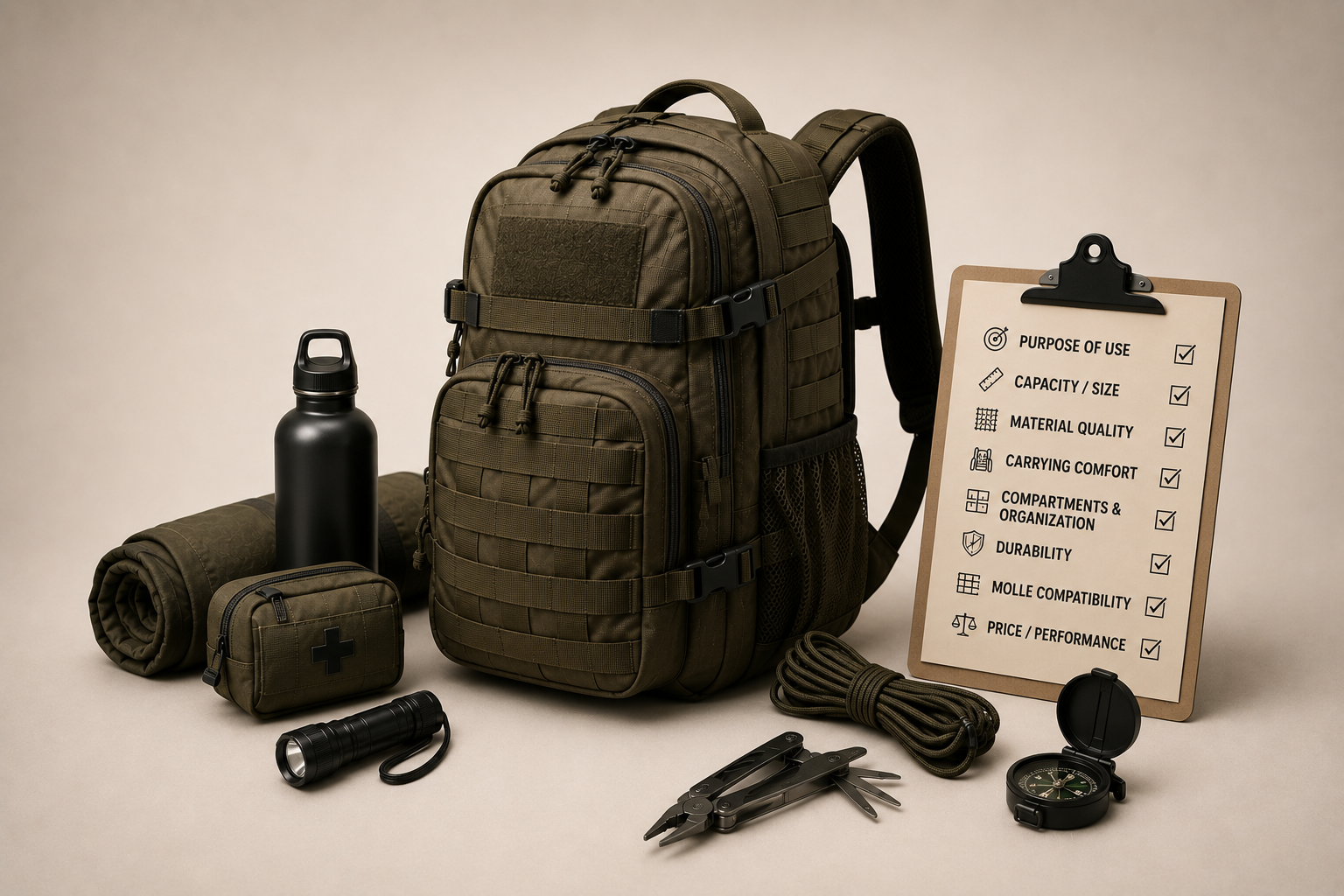
What Is the MOLLE System?
Many tactical and outdoor backpacks include a MOLLE (Modular Lightweight Load-carrying Equipment) system.
This webbing allows users to attach:
Utility pouches
Water bottle holders
First aid kits
Tool organizers
Camping accessories
MOLLE provides excellent flexibility for customizing your backpack based on your adventure.
Common Backpack Buying Mistakes
Avoid these common mistakes:
Buying a backpack that's too large
Ignoring carrying comfort
Choosing low-quality zippers
Forgetting weather protection
Overpacking unnecessary gear
Ignoring torso size
Buying based only on appearance
Choosing the right backpack is an investment in comfort and safety.
Frequently Asked Questions
What size backpack is best for camping?
A 35–50L backpack is ideal for most weekend camping trips, while 50–65L backpacks are better suited for multi-day trekking adventures.
Is 600D or 1000D better?
600D fabric is lighter and more suitable for general outdoor activities, while 1000D Cordura® provides exceptional durability for demanding environments.
Are camping backpacks waterproof?
Most camping backpacks are water-resistant rather than fully waterproof. A rain cover offers additional protection during heavy rain.
How should a camping backpack fit?
The hip belt should carry most of the weight, while shoulder straps stabilize the load without excessive pressure.
Final Thoughts
Choosing the right camping backpack involves much more than selecting a specific size.
Capacity, comfort, carrying system, material quality, weather resistance, and overall organization all contribute to a better outdoor experience.
A well-designed backpack not only protects your gear but also helps you hike farther, camp more comfortably, and enjoy every adventure with confidence.