How to Choose the Right Tactical Gear Manufacturer for Your Brand
Choosing the right tactical gear manufacturer is one of the most important decisions when building or expanding a tactical, outdoor, military, or security equipment brand.
The right manufacturing partner can help you develop reliable products, control costs, maintain consistent quality, and scale your business. The wrong partner can lead to inconsistent production, delays, quality issues, and unnecessary costs.
This guide explains the key factors you should consider when selecting a tactical gear manufacturer.
1. OEM vs. ODM: What’s the Difference?
Before choosing a manufacturer, it is important to understand the difference between OEM and ODM manufacturing.
OEM (Original Equipment Manufacturing) allows your brand to develop products according to your own specifications, designs, materials, dimensions, and requirements.
ODM (Original Design Manufacturing) usually means selecting and customizing an existing manufacturer design. Customization may include colors, materials, branding, labels, packaging, or other product features.
If you already have your own product designs, an OEM manufacturer is usually the better choice. If you want to launch products quickly without developing everything from scratch, ODM can be a more efficient option.
2. Manufacturing Experience Matters
Tactical gear requires more than basic sewing and assembly.
A reliable manufacturer should understand the specific requirements of tactical and outdoor equipment, including:
Heavy-duty fabrics
Reinforced stitching
Load-bearing areas
MOLLE systems
Webbing and buckles
Zippers and hardware
Waterproof and weather-resistant materials
Ergonomic construction
Ask potential manufacturers about their previous experience with tactical backpacks, tactical vests, pouches, outdoor equipment, or similar products.
3. Check the Materials and Components
The quality of tactical gear depends heavily on the materials used.
Depending on the application, manufacturers may work with materials such as nylon, polyester, Cordura® fabrics, different webbing specifications, mesh, foam, buckles, zippers, and other components.
Do not evaluate a manufacturer only by the final product. Ask about:
Fabric specifications
Fabric weight
Webbing strength
Stitching construction
Hardware quality
Zipper suppliers
Available material options
A professional manufacturer should be able to explain the differences between materials and recommend appropriate options for your application.
4. Custom Design and Prototyping
For brands developing their own products, the manufacturer's ability to support product development is critical.
A strong OEM partner should be able to work from:
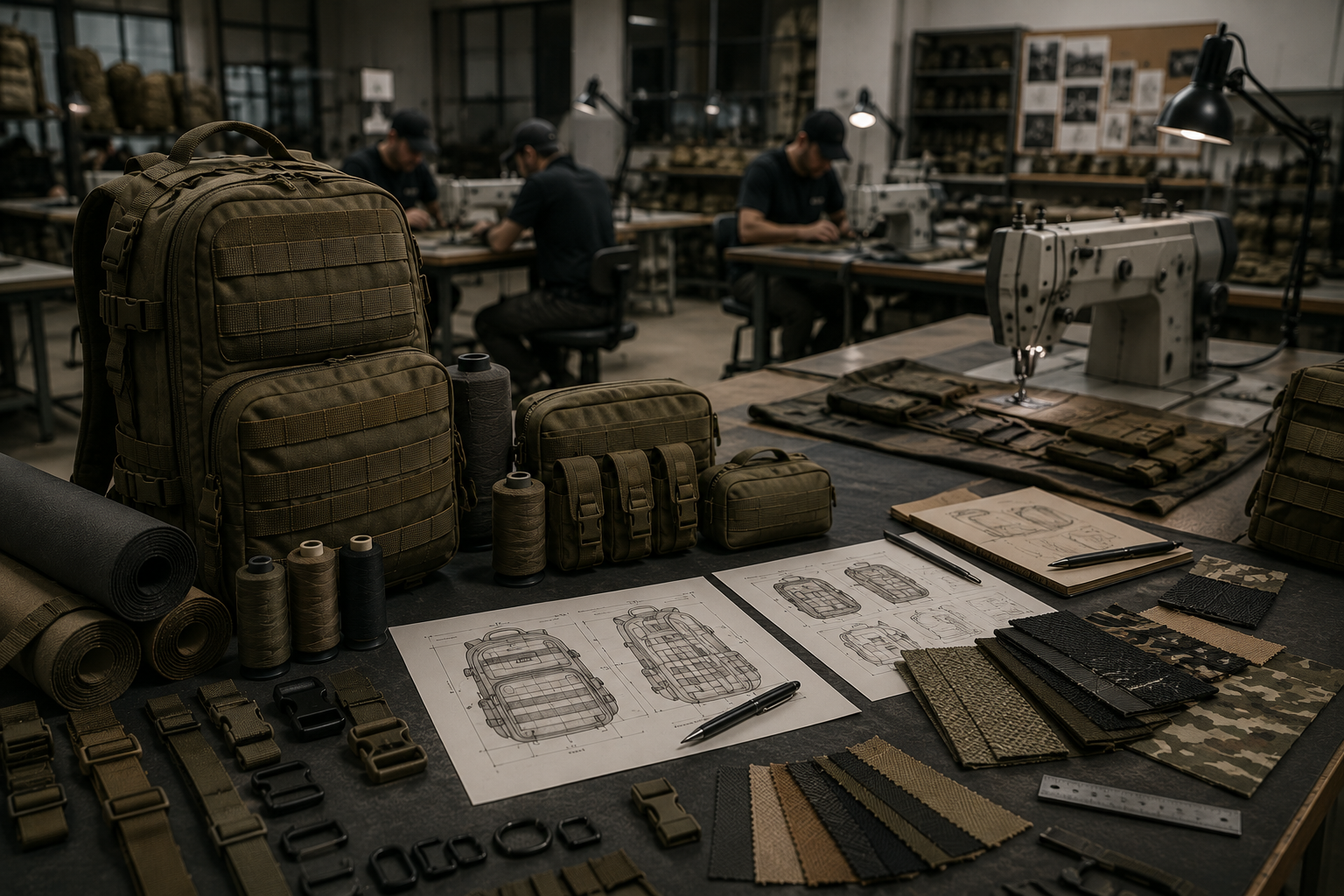
Technical drawings
Product specifications
Samples
Reference products
CAD files
Measurements and dimensions
The development process should normally include prototype production, evaluation, revisions, and approval before mass production begins.
This reduces the risk of discovering design or manufacturing problems after a large production run has already started.
5. MOQ and Production Capacity
Minimum Order Quantity (MOQ) is another important factor.
A manufacturer may offer excellent quality but still be unsuitable for your business if its MOQ is too high.
When evaluating a supplier, ask:
What is the MOQ?
Can the MOQ vary by product or material?
What is the monthly production capacity?
Can production scale as your business grows?
How are repeat orders handled?
The ideal manufacturer should be able to support your current requirements while also having the capacity to grow with your brand.
6. Quality Control
Quality control should be part of the manufacturing process, not something considered only at the end.
Ask how the manufacturer controls quality during:
Material inspection
Cutting
Sewing and assembly
Hardware installation
Final inspection
Packaging
For tactical products, particular attention should be given to stitching, stress points, webbing attachment, dimensions, zippers, buckles, and overall construction.
Consistent quality is especially important for brands that need to maintain the same product specifications across multiple production batches.
7. Certifications and Compliance
Depending on your target market and product category, certain certifications, testing procedures, or compliance requirements may apply.
Before starting production, clearly define the requirements for your destination market.
Your manufacturer should be able to provide relevant technical documentation and support the required quality and compliance processes where applicable.
8. Lead Times and Communication
A competitive price is not enough if the manufacturer cannot deliver on time.
Discuss the expected timeline for:
Product development
Prototype production
Sample approval
Material sourcing
Mass production
Quality inspection
Packaging
Shipping
Communication is equally important.
Your manufacturer should respond clearly to technical questions, production updates, revisions, and quality concerns.
9. Why Consider a Tactical Gear Manufacturer in Turkey?
Turkey has an established manufacturing industry with experience in textiles, bags, technical products, and outdoor equipment.
For European brands, working with a Turkish manufacturer can also offer logistical advantages due to Turkey's proximity to European markets.
When evaluating a Turkish manufacturer, however, the same principles still apply: production quality, technical capability, communication, capacity, materials, and reliability should be evaluated before choosing a supplier.
10. Choosing the Right Manufacturing Partner
The best tactical gear manufacturer is not necessarily the one offering the lowest price.
A better evaluation should consider the complete manufacturing relationship:
Product development + Materials + Quality + Communication + Capacity + Logistics + Cost
A reliable manufacturing partner should understand your product requirements, communicate clearly, maintain consistent quality, and provide a production process that can scale with your business.
How CEDX Supports Tactical Gear Brands
CEDX Outdoor works with brands and organizations looking for custom tactical and outdoor equipment manufacturing.
Our capabilities include product development, custom manufacturing, material selection, prototyping, and production of tactical and outdoor equipment.
Whether you are launching a new tactical product or expanding an existing product line, choosing the right manufacturing partner can make a significant difference to your long-term success.
Ready to Develop Your Tactical Gear?
If you are looking for an OEM manufacturing partner for tactical backpacks, tactical bags, vests, pouches, or outdoor equipment, contact CEDX Outdoor to discuss your requirements.
Tell us about your product, specifications, target quantity, and requirements — and let's discuss your project.