How to Choose a Tactical Backpack? 2026 Complete Buying Guide
When choosing a tactical backpack, factors such as fabric quality, MOLLE compatibility, stitching, carrying comfort, durability and intended use are essential.
A tactical backpack is not simply a bag with a military-inspired appearance. It is a piece of equipment designed to carry weight, organize essential gear and perform reliably in demanding environments.
So, how do you choose the right tactical backpack?
In this guide, we explain the most important factors to consider before buying a tactical backpack, from fabric and MOLLE systems to construction quality, ergonomics and long-term durability.
1. Fabric Quality
The fabric is one of the most important factors determining the durability of a tactical backpack.
Low-quality polyester fabrics can wear out quickly, especially at high-friction areas and stress points. The fabric can also deform or tear around heavily loaded seams.
For demanding applications, look for technical fabrics such as CORDURA® or high-denier Oxford fabric.
Why Does Fabric Matter?
A good tactical backpack should be able to withstand:
Continuous abrasion
Heavy loads
Outdoor exposure
Repeated use
Contact with rough surfaces
Stress around attachment points
CORDURA® fabric is particularly well known for its excellent abrasion and tear resistance and is widely used in tactical and outdoor equipment.
However, fabric quality should not be evaluated by denier alone. Weave construction, yarn characteristics, coatings, stitching and overall product design also have a significant impact on durability.
2. MOLLE System
The MOLLE system (Modular Lightweight Load-carrying Equipment) allows additional pouches, accessories and equipment to be attached to a tactical backpack.
MOLLE-compatible webbing is particularly useful when you need to customize your carrying setup according to your mission, activity or equipment.
Why Is MOLLE Important?
A well-designed MOLLE system allows you to:
Add external pouches
Carry additional equipment
Customize the backpack configuration
Improve gear organization
Adapt the backpack to different activities
For professional, tactical and outdoor applications, a reliable MOLLE system can significantly increase the versatility of a backpack.
When evaluating a MOLLE backpack, pay attention to the quality and attachment of the webbing, not just the number of rows.
3. Stitching and Manufacturing Quality
Even the strongest fabric cannot compensate for poor construction.
A tactical backpack is exposed to repeated loading and stress, particularly around:
Shoulder strap attachment points
Handles
Bottom panels
Side seams
MOLLE attachment areas
Zipper ends
Weak stitching can lead to tearing or deformation when the backpack is heavily loaded.
What Should You Look For?
Look for:
Double or reinforced stitching
Bar-tack reinforcement at high-stress points
Reinforced corners
Strong seam construction
Clean and consistent finishing
The internal organization of the backpack is also important. Clearly separated compartments can make equipment easier and faster to access.
4. Carrying Comfort
Durability is important, but a tactical backpack must also be comfortable to carry.
If you plan to carry the backpack for extended periods, look for padded and adjustable shoulder straps.
A properly designed back panel can also improve ventilation and reduce pressure on the body.
What About a Hip Belt?
A tactical backpack with a hip belt can transfer part of the load from the shoulders to the hips.
This can be particularly useful when carrying heavier equipment for longer periods.
When comparing backpacks, consider:
Shoulder strap padding
Strap adjustability
Back panel construction
Hip belt design
Load distribution
Overall fit
The right tactical backpack should remain stable and comfortable even when fully loaded.
5. Brand, Manufacturing Quality and Warranty
A tactical backpack is a long-term piece of equipment, so the manufacturer behind the product matters.
Instead of choosing a product based only on its appearance or price, consider whether the manufacturer has:
Established production capabilities
Experience with technical bags
Consistent quality-control processes
Reliable component sourcing
After-sales support
Spare parts or repair capabilities where applicable
A strong manufacturing background can make a significant difference in product consistency and long-term reliability.
6. Choose the Backpack According to Your Intended Use
There is no single tactical backpack that is perfect for every application.
Before buying one, define how you will actually use it.
Everyday Carry
For everyday use, prioritize:
Moderate capacity
Comfortable shoulder straps
Laptop or document compartment
Practical organization
Low overall weight
Outdoor and Hiking
For hiking and outdoor activities, consider:
Weather-resistant materials
Comfortable back support
Lightweight construction
External attachment points
Adequate capacity for equipment
Tactical and Professional Use
For demanding tactical applications, prioritize:
High-durability fabric
MOLLE compatibility
Reinforced stitching
Strong hardware
Load-bearing capability
Easy access to essential equipment
The best tactical backpack is the one designed around the way you actually use it.
7. Zippers and Hardware
Zippers, buckles and other hardware are often overlooked when buying a tactical backpack.
However, these components are among the parts that experience repeated mechanical stress.
Look for:
Reliable zippers
Durable buckles
Strong webbing
Reinforced zipper ends
Quality hardware from reputable manufacturers
A high-quality backpack is a complete system. Fabric, stitching and hardware must work together.
8. Capacity and Internal Organization
Choosing the right capacity is just as important as choosing the right material.
A backpack that is too small can become difficult to organize, while an unnecessarily large backpack adds weight and bulk.
Consider your typical equipment and choose the capacity accordingly.
Useful internal features include:
Dedicated compartments
Zippered pockets
Elastic organizers
Hydration compatibility
Laptop or electronics compartments
Quick-access pockets
Good organization allows you to find equipment quickly without having to empty the entire backpack.
9. Water Resistance
If the backpack will be used outdoors, water resistance should also be considered.
Look for:
Water-resistant outer fabric
Suitable fabric coatings
Covered or protected zippers
Properly constructed seams
Keep in mind that water-resistant does not automatically mean waterproof.
The actual level of protection depends on the fabric, coating, construction and design of the backpack.
10. Weight vs. Durability
A common mistake is assuming that the heaviest tactical backpack is automatically the most durable.
In reality, the goal should be to find the right balance between:
Durability + Weight + Capacity + Comfort
A backpack made from very heavy materials may provide excellent durability but become uncomfortable during long periods of use.
For everyday carry or hiking, a lighter construction may be preferable.
For professional tactical applications, greater structural durability may justify additional weight.
How to Choose the Right Tactical Backpack?
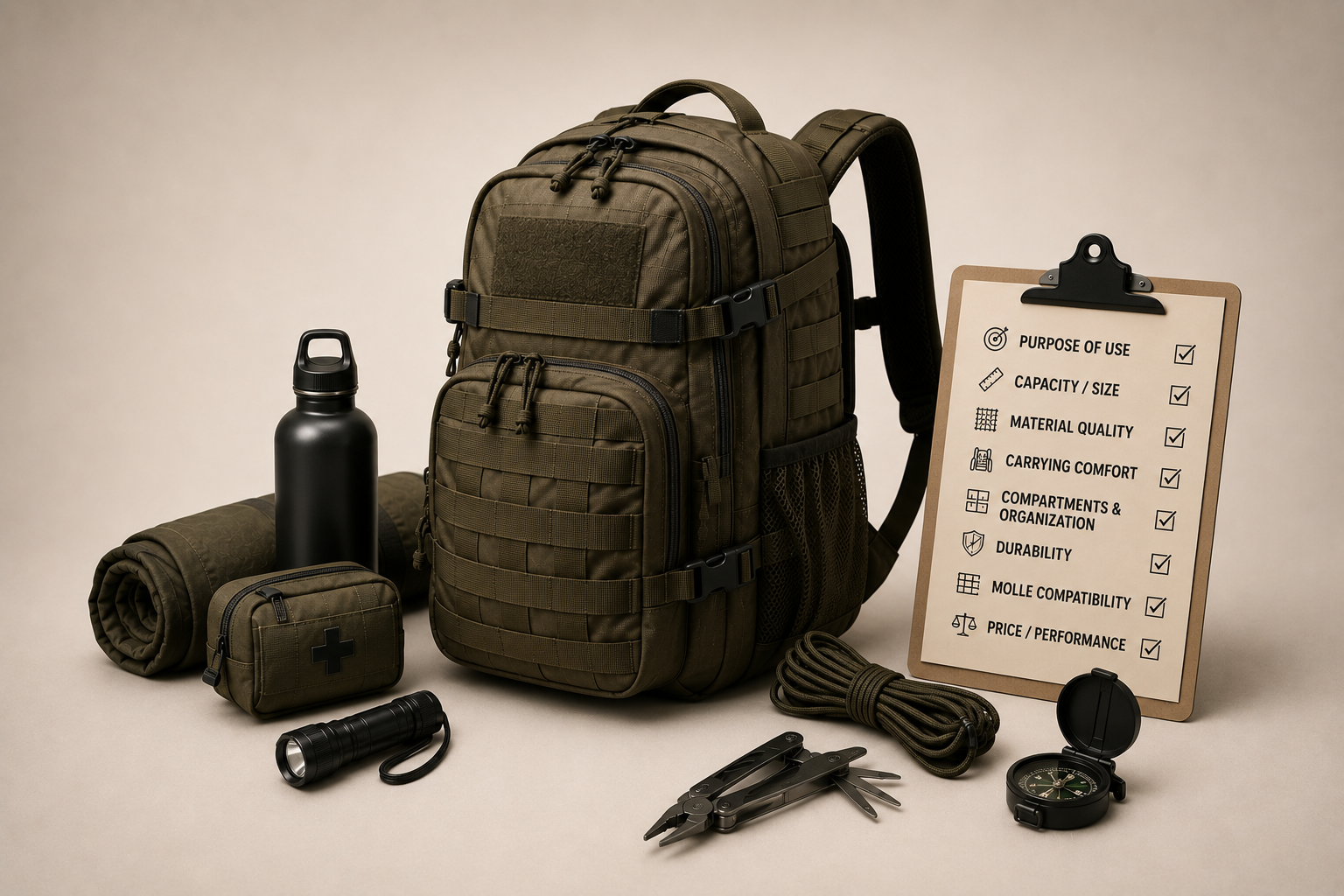
Before buying a tactical backpack, ask yourself these questions:
1. What will I use it for?
Everyday carry, hiking, camping, professional or tactical use?
2. How much equipment will I carry?
Choose the capacity based on your actual equipment rather than choosing the largest backpack available.
3. What fabric is used?
Look for durable technical fabrics such as CORDURA® or high-denier materials.
4. Does it have a reliable MOLLE system?
If modularity is important, check the construction and attachment of the MOLLE webbing.
5. Is the carrying system comfortable?
Check shoulder straps, back support, adjustability and load distribution.
6. Are the stress points reinforced?
Pay particular attention to handles, shoulder strap attachments, the bottom and MOLLE areas.
7. Is the hardware durable?
Zippers, buckles and webbing are critical components.
8. Does the manufacturer have a reliable production background?
A strong manufacturing process contributes to consistent quality and long-term reliability.
CEDX Outdoor Tactical Backpacks
At CEDX Outdoor, we develop tactical backpacks and technical bags designed for demanding outdoor and professional applications.
Our tactical backpack solutions combine:
Durable CORDURA® fabrics
MOLLE-compatible modular systems
Reinforced stitching
Durable hardware
Functional internal organization
Professional manufacturing and quality control
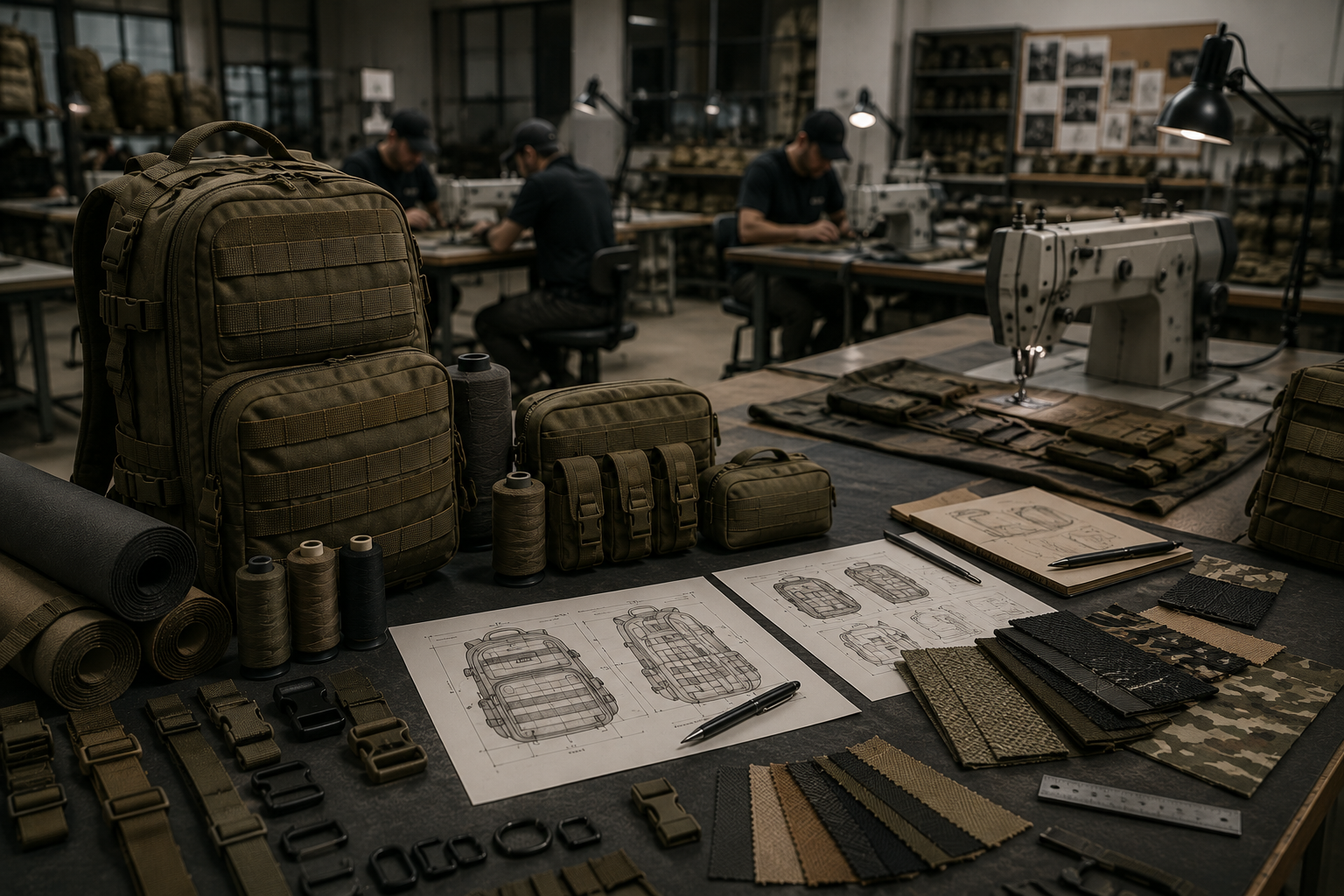
Our experience in technical bag manufacturing allows us to focus not only on the appearance of a product, but also on the details that determine how it performs in real-world use.
For brands looking for custom tactical backpack manufacturing, CEDX Outdoor also provides OEM/ODM production solutions, from material selection and product development to manufacturing and quality control.
Conclusion
Choosing a tactical backpack should never be based on appearance alone.
Fabric quality, MOLLE compatibility, stitching, hardware, carrying comfort, capacity and intended use are all important factors that determine the long-term performance of a tactical backpack.
A well-designed tactical backpack is an investment in durability, organization and reliability.
Whether you need a backpack for everyday carry, outdoor activities or professional applications, choose a model that matches your actual requirements rather than simply choosing the most rugged-looking option.
The best tactical backpack is not necessarily the largest or heaviest one.
It is the backpack that provides the right balance of durability, weight, capacity, comfort and functionality for your specific needs.
Related Keywords
tactical backpack, tactical bag, how to choose a tactical backpack, MOLLE backpack, Cordura tactical backpack, military backpack, tactical gear, durable backpack, outdoor backpack, professional tactical backpack, tactical backpack buying guide
Related Articles
What Is Cordura Fabric? Features, Types & Uses
How to Choose a Camping Backpack — Complete 2026 Guide
What Is a MOLLE Tactical Backpack?