How to Choose a Camping Tent — 3-Season or 4-Season? (2026 Guide)
Choosing the right camping tent can have a major impact on your outdoor experience. The wrong tent can mean an uncomfortable night's sleep, wet equipment, poor ventilation, or inadequate protection in changing weather conditions.
So, how do you choose the right camping tent?
In this comprehensive guide, we compare the main tent types, explain the differences between 2-season, 3-season and 4-season tents, and cover the most important factors to consider when buying a camping tent — including capacity, weight, materials, waterproofing, ventilation, setup and durability.
Types of Camping Tents and Their Uses
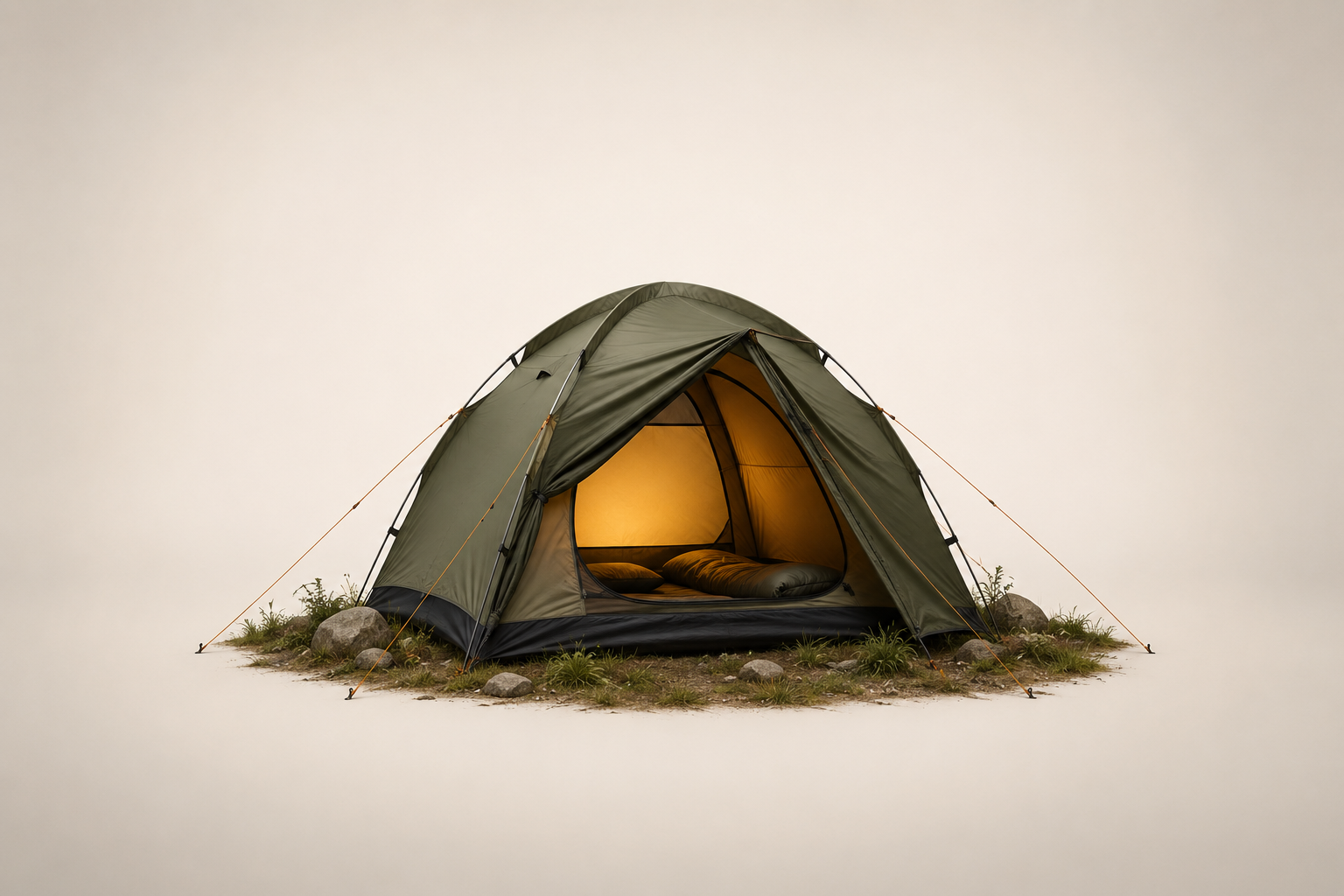
1. Dome Tent
Design: Two or more poles cross over each other to create a dome-shaped structure.
Advantages:
Easy to set up, typically within 5–10 minutes
Good wind resistance thanks to its aerodynamic shape
Spacious interior for its size
Freestanding design on many models
Disadvantages:
Some models with multiple poles can be relatively heavy
Sloping side walls reduce usable headroom near the edges
Best for: General camping, trekking, weekend trips and festivals.
2. Tunnel Tent
Design: Parallel poles create a tunnel-shaped structure.
Advantages:
Excellent interior space with relatively vertical walls
Efficient use of poles can reduce weight
Large vestibule areas for storing equipment
Disadvantages:
More sensitive to strong crosswinds and should be positioned correctly
Usually requires stakes and guy lines for proper stability
Not generally freestanding
Best for: Long-term camping, car camping and groups of three or more.
3. Geodesic Tent
Design: Multiple intersecting poles create a highly reinforced structure with triangular sections.
Advantages:
Excellent structural stability
Strong resistance to wind and snow
Suitable for mountaineering and 4-season use
Disadvantages:
Heavier due to multiple poles
More expensive
More complex to set up
Best for: Mountaineering, winter camping, high-altitude trips and extreme weather conditions.
4. A-Frame / Ridge Tent
Design: A classic triangular roof structure supported by poles at each end.
Advantages:
Simple construction
Lightweight and economical
Classic outdoor design
Disadvantages:
Limited interior space
Less effective in strong winds
Less versatile than modern tent designs
Best for: Occasional or traditional camping where simplicity is the priority.
Tent Season Ratings: 2-Season, 3-Season or 4-Season?
One of the most important decisions when choosing a camping tent is selecting the appropriate season rating.
2-Season Tent — Spring and Summer
2-season tents are designed primarily for mild and relatively stable weather.
Typical characteristics:
Lightweight construction
High ventilation with generous mesh panels
Basic rain protection
Designed for warm, dry and relatively calm conditions
Best for: Summer camping and fair-weather trips.
3-Season Tent — Spring, Summer and Autumn
The 3-season tent is the most versatile and popular choice for general camping.
Typical characteristics:
Moderate weight, often around 2–3 kg for a 2-person tent
Good balance between ventilation and weather protection
Typical waterproof ratings around 2,000–3,000 mm hydrostatic head, depending on the construction
Suitable for light to moderate rain and wind
Best for: Camping from spring through autumn, trekking and general outdoor use.
Limitations:
Not designed for heavy snow loads
Less suitable for severe alpine conditions and extreme winds
4-Season Tent — Year-Round and Winter Camping
4-season tents are designed for demanding conditions, including winter camping, mountaineering and high-altitude environments.
Typical characteristics:
Heavier construction
Multiple poles, often using a geodesic or semi-geodesic design
More enclosed inner tent with less mesh
Snow skirts on suitable models
Stronger poles, stakes and guy-line systems
Best for: Winter camping, high-altitude trips and severe weather.
Disadvantages:
Heavier and bulkier
Reduced ventilation can increase condensation
Generally more expensive than 3-season models
10 Key Factors When Choosing a Camping Tent
1. Tent Capacity
Tent capacity is one of the first things to consider.
A manufacturer's stated capacity often represents the maximum number of people who can technically sleep inside. For greater comfort, many campers prefer to choose a tent rated for one additional person.
For example:
2-person tent: Comfortable for 1–2 people with equipment
3-person tent: Comfortable for 2 people
4-person tent: Comfortable for 3 people or 2 people with additional gear
Typical interior widths:
Solo: approximately 90–100 cm
Two-person: approximately 130–150 cm
Minimum recommended length: around 210 cm
Always check the actual floor dimensions rather than relying only on the advertised capacity.
2. Tent Weight
The ideal tent weight depends heavily on how you plan to transport it.
Backpacking:
Solo: approximately 1–1.5 kg
Two-person: approximately 2–2.5 kg
Car camping:
Weight is less important, so larger and heavier tents can be perfectly practical.
Bikepacking:
A lighter setup is usually preferable, with many campers targeting a total tent weight of around 2 kg or less.
Packed size: For backpacking, the tent should fit efficiently inside or onto your backpack. A compact packed size of approximately 30–40 cm in length can be useful.
3. Materials and Durability
The materials used in a tent have a direct impact on weight, durability, weather resistance and overall performance.
Flysheet
Common materials include:
Ripstop nylon: Lightweight, strong and often coated with PU or silicone
Polyester: Good UV resistance and generally less stretch than nylon
Silnylon / Dyneema composite materials: Used in ultralight and premium tents
Inner Tent
Common materials include:
No-see-um mesh: Fine mesh designed to keep insects out
Ripstop nylon: Lightweight and durable fabric for enclosed areas
Tent Floor
The floor is exposed to moisture, dirt and abrasion, so it is usually made from a heavier fabric.
Typical characteristics include:
Higher-denier fabric, often around 70–150D depending on the design
Waterproof ratings commonly higher than the flysheet
Bathtub-style construction, where the floor extends upward along the walls
Tent Poles
Aluminum alloy:
Durable
Relatively lightweight
Common in quality outdoor tents
Carbon fiber:
Extremely lightweight
Expensive
More sensitive to impact and certain types of damage
Fiberglass:
Generally heavier
Common in entry-level tents
Less suitable for demanding technical applications
4. Waterproof Rating
One of the most important specifications when choosing a waterproof camping tent is its Hydrostatic Head (HH) rating.
Typical reference points include:
1,500 mm: Light rain
2,000–3,000 mm: Moderate rain and common 3-season applications
3,000–5,000 mm: Heavy rain
5,000 mm+: Higher protection for demanding conditions
However, waterproof performance depends on more than the HH rating alone.
Other important features include:
Taped seams: Help prevent water from entering through stitching
Full-coverage flysheet: Provides better protection from rain and wind
Vestibule: Protects equipment and creates a covered transition area
5. Ventilation
Poor ventilation can lead to condensation, which can make the inside of your tent and your equipment feel wet even when the tent itself is not leaking.
Look for:
Double-wall construction with an air gap between the inner tent and flysheet
Mesh panels on doors, sides or upper sections
Adjustable ventilation vents
Door awnings that allow airflow while providing rain protection
Good ventilation is particularly important in humid conditions and during cold-weather camping.
6. Ease of Setup
Fast and straightforward setup becomes especially important when you are tired, arriving late, or setting up in rain or changing weather.
Useful features include:
Freestanding construction: Allows the tent to stand without being fully staked
Color-coded poles: Makes assembly easier
Clip systems: Usually faster to assemble
Pole sleeves: Can provide a more integrated structure and good wind performance
One-person setup: Particularly useful for solo campers
A practical target for a general-purpose tent is approximately 5–10 minutes for setup.
7. Vestibule Space
A vestibule provides valuable covered space outside the sleeping area.
It can be used for:
Storing backpacks and equipment
Removing muddy or wet footwear
Storing wet clothing
Preparing food where appropriate
Approximate space requirements:
Minimum: Around 0.5–1 m² for footwear and basic gear
Comfortable: Around 1.5–2 m² for additional storage and practical use
Dual vestibules: Useful when two people need independent entrances and additional storage
8. Number and Type of Doors
Door configuration affects both comfort and ventilation.
Single door: More economical and suitable for solo use
Two doors: More convenient for two people, especially for nighttime access
A D-shaped door can provide a wider and more comfortable entrance than narrow vertical openings.
9. Interior Organization
Small organizational features can make a noticeable difference during longer trips.
Useful features include:
Mesh pockets: For phones, headlamps and glasses
Gear loft: Overhead storage for lightweight items
Lantern hook: Convenient location for a light
These details become particularly useful when the tent is used regularly.
10. Price-to-Performance Ratio
The most expensive tent is not necessarily the best tent for every camper.
Consider your actual usage, weather conditions, frequency of use and transportation method.
A simple way to think about the market is:
Entry level: Basic camping and occasional use
Mid-range: Regular camping, trekking and outdoor use
Premium: Technical applications, ultralight backpacking and extreme environments
Instead of focusing only on price, evaluate durability, materials, weight, weather protection and expected service life.
Camping Tent Recommendations by Use Case
Scenario 1: First-Time Camper — Weekend Trips
Type: 3-season dome tent
Capacity: 2–3 people
Weight: 2.5–3.5 kg
Best for: Weekend camping and general outdoor use
A 3-season dome tent is usually the most practical starting point for beginners.
Scenario 2: Trekking Enthusiast — Lightweight Backpacking
Type: Ultralight 3-season tent
Capacity: 1–2 people
Weight: Approximately 1–2 kg
Priority: Low weight and compact packed size
For backpacking, every gram matters. Look for a good balance between weight, durability, weather protection and interior space.
Scenario 3: Mountaineer / Winter Camper
Type: 4-season geodesic tent
Capacity: 2 people
Weight: Approximately 3–5 kg
Priority: Structural strength and weather resistance
For winter mountaineering and high-altitude use, structural stability and snow and wind resistance are generally more important than minimizing weight.
Scenario 4: Family Camping — Car Camping
Type: Tunnel or cabin-style tent
Capacity: 4–6 people
Weight: 6–10 kg can be acceptable
Priority: Interior space and comfort
When camping by car, weight is less critical. A larger tent with more headroom and living space can significantly improve comfort.
Tent Maintenance and How to Extend Its Lifespan
Proper maintenance can significantly extend the service life of a camping tent.
After Use
Dry the tent completely before storage
Dry the flysheet and inner tent separately
Remove dirt, sand and debris
Clean sand and dirt from the pole sections and connections
Storage
Store the tent loosely rather than keeping it tightly compressed for long periods
Keep it in a cool, dry and well-ventilated area
Avoid prolonged exposure to direct sunlight
Do not store the tent permanently inside a compression sack
Repairs
For minor issues:
Small tear: Use appropriate repair tape
Damaged seam: Apply a suitable seam sealer
Reduced water repellency: Consider reproofing the fabric with an appropriate DWR product
Broken stake: Keep compatible replacement stakes available
Always follow the manufacturer's care and repair recommendations for the specific tent.
Useful Camping Tent Accessories
The right accessories can improve both protection and convenience.
Footprint / Groundsheet: Helps protect the tent floor from abrasion and moisture
Spare Stakes: Aluminum or titanium stakes can be useful for demanding conditions
Guy-Line Reflectors: Help reduce the risk of tripping at night
Repair Kit: Useful for field repairs, including patches, thread and replacement hardware
CEDX Outdoor and Camping Equipment
At CEDX Outdoor, we develop practical carrying and organization solutions for outdoor equipment.
Our solutions include:
Tent carrying bags with compression straps
Stake and pole organizers
Multi-purpose tarps
MOLLE-compatible bags for camping accessories
For outdoor brands and equipment manufacturers, we also provide custom manufacturing solutions for technical bags and outdoor equipment.
Conclusion: 3-Season or 4-Season Tent?
For most campers, a 3-season tent is the best choice.
If you are not planning winter mountaineering, high-altitude expeditions or camping in heavy snow, a good 3-season tent will generally provide the right balance of weight, ventilation, weather protection and price.
Choose a 4-Season Tent If You Regularly Plan:
Winter mountaineering
High-altitude expeditions, particularly above 3,000 m
Camping in areas where heavy snow or severe storms are expected
Technical outdoor activities in demanding conditions
Our Final Recommendation
If this is your first camping tent, a mid-range 3-season dome tent is usually the safest and most versatile choice.
As you gain experience, you can upgrade to a lighter, larger or more technical tent based on your specific needs.
The best camping tent is not necessarily the most expensive or the most durable model. It is the tent that provides the right combination of weight, capacity, weather protection, durability and comfort for the way you actually camp.
Related Keywords
camping tent, how to choose a camping tent, 3-season tent, 4-season tent, dome tent, trekking tent, backpacking tent, waterproof tent, lightweight tent, outdoor tent, tent types, camping gear, tent maintenance
Related Articles
How to Choose a Camping Backpack — Complete 2026 Guide
Trekking Gear Checklist — Complete 2026 Checklist
Bushcraft Gear — Outdoor Survival Guide