Trekking Equipment Checklist — Complete Hiking Gear List 2026
Preparing the right trekking equipment checklist is one of the most important steps before heading into the outdoors.
Too little equipment can compromise safety and comfort, while carrying too much creates unnecessary weight and makes a long hike more demanding.
So, what do you actually need for trekking?
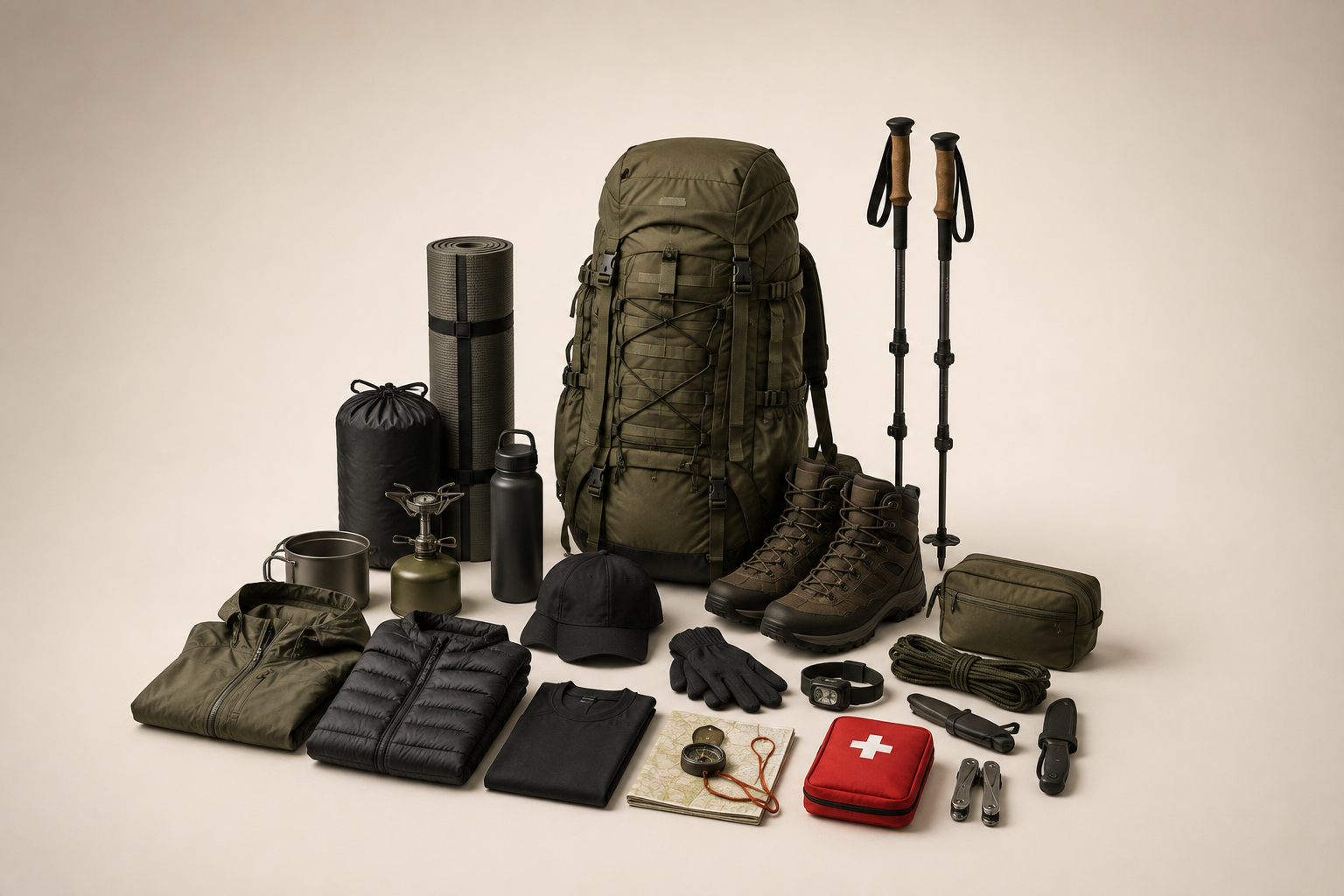
In this complete 2026 trekking equipment checklist, we cover the essential gear for hiking and multi-day trekking, including backpacks, shelter, sleeping systems, clothing layers, cooking, hydration, navigation, first aid, personal hygiene and optional comfort equipment.
The list can be adapted according to the season, route, weather conditions, trip duration and level of experience.
Trekking Equipment Categories
We will divide the essential trekking equipment into 10 main categories:
Carrying System — Backpack
Shelter — Tent and Alternatives
Sleeping System — Sleeping Bag and Sleeping Pad
Clothing Layers
Cooking and Food
Water and Hydration
Navigation
First Aid and Safety
Hygiene and Personal Care
Optional and Comfort Equipment
1. Carrying System
Trekking Backpack
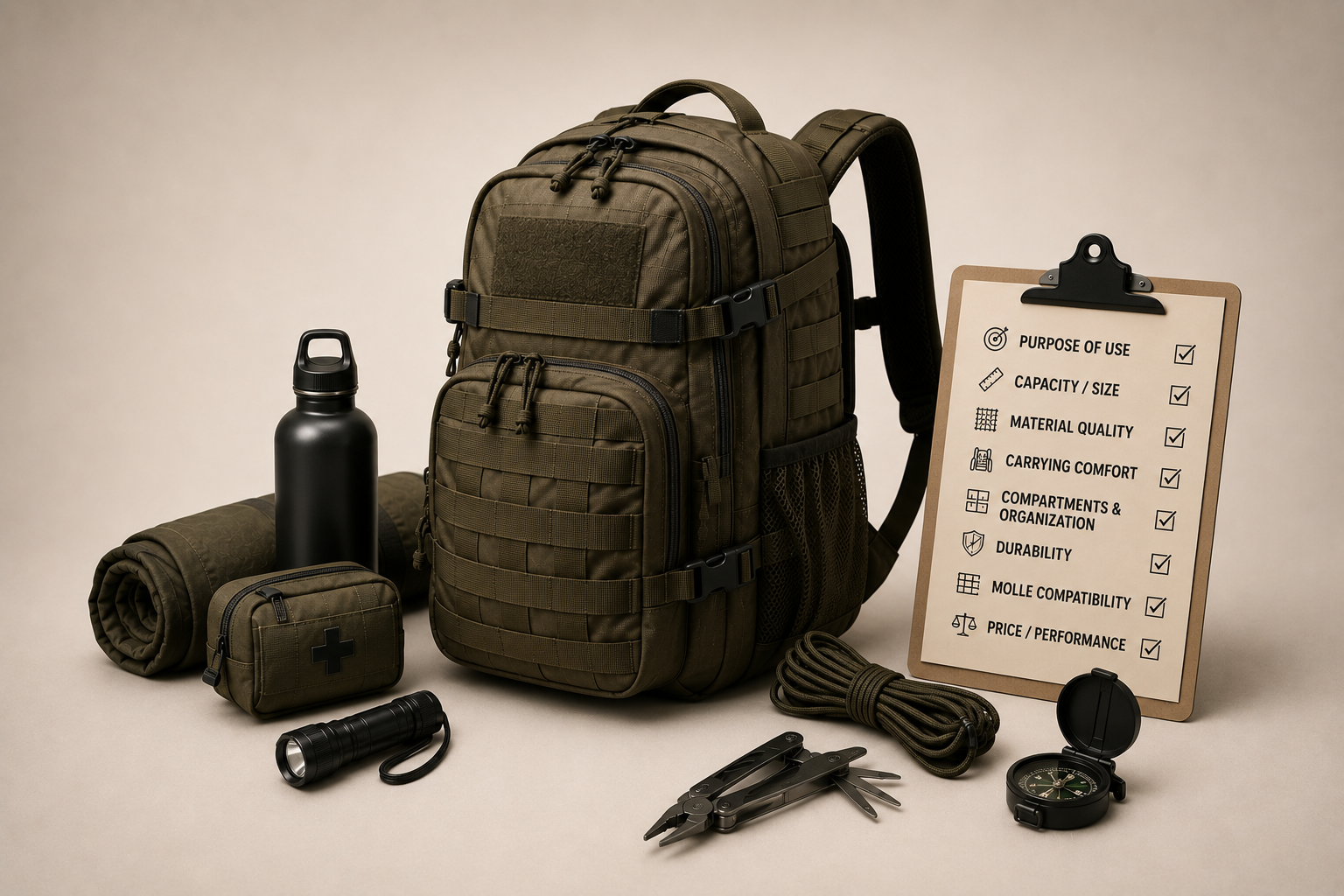
Your backpack is one of the most important pieces of hiking equipment because it carries almost everything else you need.
Choose the capacity according to the length of your trip and the amount of equipment you need to carry.
Typical capacities include:
Day hike: 20–30 L
1–2 nights: 35–50 L
3–5 nights: 50–65 L
5+ nights / winter: 65–80 L
These are general guidelines rather than strict rules. Lightweight equipment can significantly reduce the required backpack volume.
Useful Backpack Accessories
Consider adding:
Rain cover
Dry bags for clothing and sensitive equipment
Compression sack for sleeping bag
Stuff sacks for organizing tent and equipment
Hydration bladder
External MOLLE-compatible pouches where appropriate
A good backpack should not only have sufficient capacity but also provide comfortable load distribution and easy access to frequently used equipment.
2. Shelter System
Trekking Tent
Your tent should be selected according to the season, weather conditions, number of people and type of terrain.
Important factors include:
Capacity: Number of people plus space for equipment
Season rating: 3-season vs. 4-season
Weight: Approximately 1–1.5 kg for some lightweight solo tents and 1.5–2.5 kg for lightweight two-person models
Weather protection: Based on fabric, construction, seams and hydrostatic head rating
Packed size: Important for backpacking
There is no universal waterproof rating that is appropriate for every trekking environment. A higher hydrostatic head can provide additional protection, but overall tent construction is equally important.
For general 3-season trekking, a well-designed tent with an appropriate waterproof rating, taped seams and a full-coverage rainfly can provide effective protection in typical rain.
Alternative Shelter Systems
Depending on the route and environment, alternatives may include:
Tarp + hammock: Lightweight option for suitable forest environments
Bivy bag: Minimalist shelter for experienced users and specific conditions
Mountain hut / refuge: Can eliminate the need to carry a tent when accommodation is available
Tent Accessories
Useful accessories include:
Footprint / groundsheet
Spare tent stakes
Extra guy lines
Tent repair kit
Repair tape
3. Sleeping System
Sleeping Bag
Your sleeping bag should be selected according to the expected overnight temperature.
When comparing sleeping bags, look at the manufacturer's temperature ratings and testing standard. Modern sleeping bag ratings commonly follow ISO 23537 testing methods.
Important temperature ratings include:
Comfort: Temperature at which a typical user can sleep comfortably
Limit: Lower temperature range for a typical experienced user
Extreme: A survival reference, not a recommended sleeping temperature
General Seasonal Guidelines
Approximate comfort ranges might include:
Summer: +5°C to +10°C and above
Spring / Autumn: Around 0°C to +5°C
Winter: Approximately -5°C to -15°C, depending on conditions
Always choose based on the actual forecast, altitude, personal tolerance and manufacturer's specifications.
Sleeping Pad
A sleeping pad provides both comfort and thermal insulation from the ground.
One of the most important specifications is the R-value.
General reference ranges:
R 1–2: Summer and warm climates
R 2–4: 3-season use
R 4–6+: Winter and snow camping
Types of Sleeping Pads
Inflatable:
Lightweight
Compact
Comfortable
Foam:
Affordable
No puncture risk
Durable
Usually bulkier
Self-inflating:
Combines characteristics of inflatable and foam pads
Trekking Pillow
A small inflatable pillow can improve sleeping comfort while adding little weight.
Typical options:
Inflatable pillow: approximately 50–100 g
Stuff sack filled with clothing as a simple alternative
4. Clothing Layering System
A proper layering system is essential for trekking because weather and activity levels can change quickly.
The classic approach consists of three main layers.
Layer 1: Base Layer
Purpose: Move moisture away from the skin.
Recommended materials include:
Merino wool
Polyester
Polypropylene
A typical setup may include:
Long-sleeve base layer
Thermal leggings for colder conditions
Cotton is generally a poor choice for cold or wet trekking because it absorbs moisture and dries slowly.
Layer 2: Mid Layer
Purpose: Provide insulation and retain body heat.
Common options include:
Fleece jacket
Synthetic insulation
Down jacket for dry and cold conditions
Fleece weights can vary considerably depending on the expected temperature and activity level.
Layer 3: Shell Layer
Purpose: Protect against wind and precipitation.
Hardshell
High weather protection
Waterproof and breathable membranes
Suitable for heavy rain and demanding conditions
Examples include technical membrane systems such as Gore-Tex and eVent.
Softshell
Flexible
Breathable
Usually offers some water and wind resistance
Suitable for active use
Windbreaker
Very lightweight
Designed primarily for wind protection
Useful in dry and mild conditions
Lower-Body Clothing
Consider:
Lightweight trekking pants
Quick-drying trousers
Stretch trekking pants
Waterproof over-trousers for rain and snow
Shorts for warm weather
Hiking Shoes and Boots
Choose footwear according to terrain and load.
Light hiking: Trail running shoes
Moderate terrain: Mid-cut hiking boots
Heavy loads / winter: Higher-cut boots with more supportive soles
Wet environments: Waterproof footwear or suitable membranes
There is no universally best hiking shoe. Fit, terrain, distance and personal preference matter as much as the construction.
Trekking Socks
Recommended options include:
Merino wool
Synthetic trekking socks
2–3 spare pairs for multi-day trips
Liner socks for users who find them helpful for reducing friction
Head and Hand Protection
Depending on the season:
Wide-brimmed sun hat
Beanie
Buff / neck gaiter
Lightweight gloves
Insulated gloves
Additional Accessories
Useful accessories include:
UV-protective sunglasses
Gaiters for mud, snow and debris
Sun protection
5. Cooking and Food
Camping Stove
The right stove depends on temperature, altitude, fuel availability and trip duration.
Canister Stove
Easy to use
Fast
Clean
Convenient for most 3-season trips
Liquid Fuel Stove
Useful in cold conditions
Can perform well at higher elevations
Requires more maintenance
Solid Fuel
Lightweight
Useful as a backup in certain situations
Wood Stove
Uses locally available fuel where permitted
Eliminates the need to carry fuel
Heavier and dependent on environmental conditions and local regulations
Cooking Equipment
A basic trekking cooking kit may include:
Pot, approximately 1–2 L depending on group size
Titanium or aluminum cookware
Spork
Bowl or plate
Cup
Lighter and waterproof matches
Small cleaning cloth or sponge
Trekking Food
Calorie requirements vary significantly according to body size, activity level, terrain and weather.
For active multi-day trekking, a rough planning range of 2,500–4,000 kcal per day can be appropriate for many adults, but individual needs vary.
Common options include:
Breakfast:
Instant oats
Granola
Dried fruit
Lunch:
Sandwich ingredients
Cheese
Cured meats where appropriate
Energy bars
Dinner:
Freeze-dried meals
Rice or pasta
Soup
Snacks:
Nuts
Chocolate
Energy gels
Dried fruit
6. Water and Hydration
Staying hydrated is one of the most important parts of trekking preparation.
Water Carrying
Common options include:
1 L reusable water bottles
2–3 L hydration bladder
Collapsible water containers
The amount of water you need depends on temperature, exertion, distance and access to reliable water sources.
Water Treatment
If you will use natural water sources, consider carrying an appropriate treatment method.
Water Filter
Examples include:
Sawyer
Katadyn
LifeStraw
Filters can remove many bacteria and protozoa, but performance depends on the specific product and contaminants present.
UV Purification
UV devices can provide rapid treatment against many microorganisms when used correctly and with sufficiently clear water.
Purification Tablets
Chemical tablets can be lightweight and useful as a backup or primary treatment method depending on the product.
Boiling
Boiling can provide highly reliable microbiological treatment when performed correctly, but it requires fuel and time.
Always follow the manufacturer's instructions for your chosen water-treatment system.
7. Navigation
Never rely exclusively on a smartphone when trekking in remote areas.
Essential Navigation Equipment
Carry:
Topographic map
Compass
GPS device or smartphone
Offline maps
Popular navigation applications can include platforms such as Gaia GPS, AllTrails and Maps.me, depending on your region and preferences.
Backup Power
Consider:
10,000–20,000 mAh power bank
Spare batteries
Solar panel for longer expeditions where practical
Offline navigation is especially important when mobile coverage is unreliable.
8. First Aid and Safety
A first-aid kit should be adapted to the length, remoteness and difficulty of your route.
Basic First-Aid Kit
Consider carrying:
Assorted adhesive bandages
Sterile gauze
Antiseptic wipes
Personal medications
Blister treatment
Elastic bandage
Tweezers
Small scissors
Emergency blanket
Your first-aid kit should also reflect your personal needs and the risks associated with the environment.
Safety Equipment
Useful items include:
Emergency whistle
Signaling mirror
Multi-tool
Paracord
Repair tape
Lighting
A headlamp is one of the most important pieces of safety equipment for multi-day trekking.
Look for:
Headlamp with adequate brightness
Red-light mode where useful
Spare batteries or backup light
A small lantern can also be useful around camp.
9. Hygiene and Personal Care
Keeping hygiene equipment compact helps reduce unnecessary backpack weight.
Cleaning
Consider:
Biodegradable soap
Quick-drying microfiber towel
Toilet paper
Waste bags
Hand sanitizer
Follow Leave No Trace principles and local regulations for human waste disposal.
Sun Protection
Essential items include:
SPF 50+ sunscreen
SPF lip balm
Hat
Sunglasses
Insect Protection
Depending on the region:
Insect repellent
Tick-removal tool
Appropriate protective clothing
10. Optional and Comfort Equipment
Not everything is essential.
Comfort equipment depends on your preferences and the length of the trip.
Optional items include:
Trekking poles
Compact camping chair or sitting pad
Book or e-reader
Camera
Compact coffee brewing kit
Playing cards
Trekking poles can also provide useful stability on steep or uneven terrain.
How to Reduce Your Trekking Pack Weight
Reducing unnecessary weight can make a major difference on long-distance hikes.
Base Weight Targets
Typical reference categories are:
Traditional: 9–13 kg
Lightweight: 6–9 kg
Ultralight: Under 6 kg
Base weight generally means the weight of your equipment excluding consumables such as food, water and fuel.
These categories are guidelines rather than strict standards.
Weight-Reduction Strategies
1. Optimize the “Big Three”
Focus first on:
Backpack
Tent
Sleeping bag
These three items often represent a significant portion of total base weight.
2. Remove “What If” Equipment
Ask yourself whether each item is genuinely necessary.
Focus on:
Must have → Useful → Nice to have
rather than carrying equipment for every hypothetical situation.
3. Choose Multi-Purpose Equipment
A single item can sometimes perform multiple functions.
For example, trekking poles may also be compatible with certain trekking shelters.
4. Reduce Packaging
Transfer toiletries and consumables into smaller containers when appropriate.
5. Go Digital
An e-reader or smartphone can replace the weight of physical books and some paper resources.
Seasonal Trekking Equipment
Winter Trekking
Additional equipment may include:
4-season tent
Cold-weather sleeping bag
Snowshoes or crampons, depending on terrain
Ice axe where technically appropriate
Insulated water bottle
Additional insulation layer
Waterproof shell
Winter gloves
Winter equipment should always be selected according to the actual route, avalanche conditions, technical difficulty and weather forecast.
Summer and Hot-Weather Trekking
Consider:
Additional water capacity
Sun protection
Lightweight tent or shelter
Breathable clothing
Lightweight sleeping system
Electrolyte replacement where appropriate
CEDX Outdoor Trekking Equipment
At CEDX Outdoor, we develop technical carrying and organization solutions for outdoor and trekking applications.
Our product solutions include:
50–70 L trekking backpacks
600D and 1000D CORDURA® options
Dry bags and waterproof organization solutions
MOLLE-compatible accessory pouches
Compression sacks
First-aid and equipment organizers
For outdoor brands and equipment companies, CEDX Outdoor also provides custom OEM/ODM manufacturing, including technical bags, outdoor equipment organizers and other carrying solutions.
Trekking Checklist: What to Check Before You Leave
One Week Before
✓ Plan the route and check the expected weather
✓ Test all major equipment
✓ Set up and inspect your tent
✓ Test the camping stove
✓ Check the contents and expiration dates of your first-aid kit
✓ Inspect hiking footwear and refresh water-repellent treatment if necessary
One Day Before
✓ Pack all equipment
✓ Charge your power bank, GPS and headlamp
✓ Prepare food
✓ Check water-treatment equipment
✓ Leave emergency contact and route information with someone you trust
Before Departure
✓ Check the latest weather forecast
✓ Review the route and access conditions
✓ Load offline maps onto your phone or GPS
✓ Check water sources along the route
✓ Confirm that essential safety equipment is accessible
Final Thoughts
A well-prepared trekking equipment checklist is the foundation of a safer and more comfortable outdoor experience.
Beginners may benefit from carrying a more comprehensive setup until they gain experience. More experienced hikers can gradually reduce their base weight by eliminating unnecessary equipment and choosing lighter alternatives.
The key is not to carry as little as possible.
The goal is to carry exactly what you need for the route, season, weather and level of risk you are actually facing.
The Golden Rule
Start with a complete and reliable setup. Gain experience. Then reduce weight intelligently.
Related Keywords
trekking equipment checklist, hiking gear checklist, trekking gear list, backpacking gear list, hiking equipment, trekking equipment, outdoor gear, camping checklist, hiking essentials, trekking essentials, ultralight backpacking, multi-day hiking gear
Related Articles
How to Choose a Camping Backpack — Complete 2026 Guide
How to Choose a Camping Tent — 3-Season vs 4-Season Guide
Bushcraft Gear — Complete Outdoor Survival Guide